WARDOGS Helicopter Pilot Guide: What Your Team Needs Each Phase
The WARDOGS pilot playbook by match phase: passenger lifts early, FOB logistics mid, fuel for the drill, scouting and CAS late — with on-screen payouts.
FAQ
What should a new helicopter pilot do first in WARDOGS?
How much is a supply drop worth in WARDOGS?
Why does my team lose the pulled hot zone?
Pallets or supply crates for helicopter logistics?
Flying well is the easy half of being a WARDOGS pilot. The hard half — the part that actually wins matches — is knowing what your team needs, where, and when: people early, materials mid, fuel at the pull, information late. This page turns Loknik’s “real job of a pilot” breakdown into a phase-by-phase playbook.
Three pages already own adjacent ground: helicopter flight controls and J-hook combat landings teach the stick work; pilot income reads the payout feed; logistics covers pallet mechanics from the ground up. This one is the decision layer on top of all three.

Loknik — The REAL Job of a Helicopter Pilot in WARDOGS
Why the Cockpit Wins Games
The video’s opening frame is the whole thesis: a delivery lands and the screen pays for it.
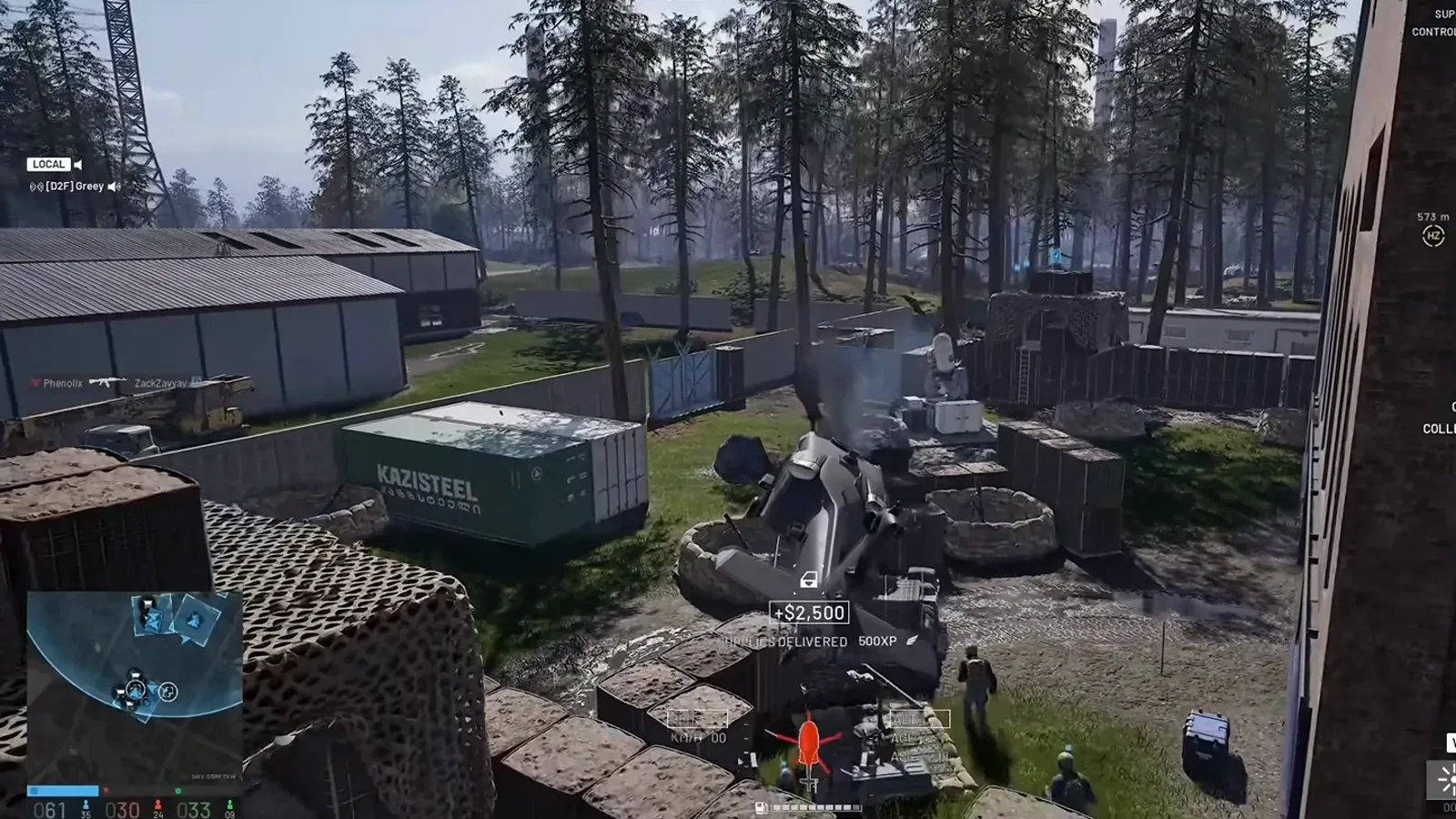 The pilot’s paycheck, on screen: +$2,500 and 500 XP for one delivered load, with zone-presence income stacking on top. The delivery is the clip nobody films — and the one that decides the match. Frame: Loknik on YouTube (seat-HUD column cropped).
The speed edge is the reason pilots exist: Bulkhead has stated that reaching the zone takes a ground vehicle roughly two and a half minutes against about 45 seconds by air (approximate figures, vehicle-dependent). Speed is the job: you can react to what the team needs while a truck is still on the road.
Early Game: People First, Then Read the FOBs
First flight: almost always passengers. Seats are passive income and XP, and infantry delivered into the fight early compounds into map control.
The decision point is the return to HQ:
- Check the map every landing. Each FOB shows supply levels. Running low? Build supplies first, above everything else — coordinate with your builders.
- FOBs holding steady? Switch to meds and ammo for the front line.
- One pilot upgrade that pays across the whole match: level Medic to Lvl 2 to unlock resuscitate, so your medical crates can stock more than one revive kit. Your deliveries keep squads in the fight longer.
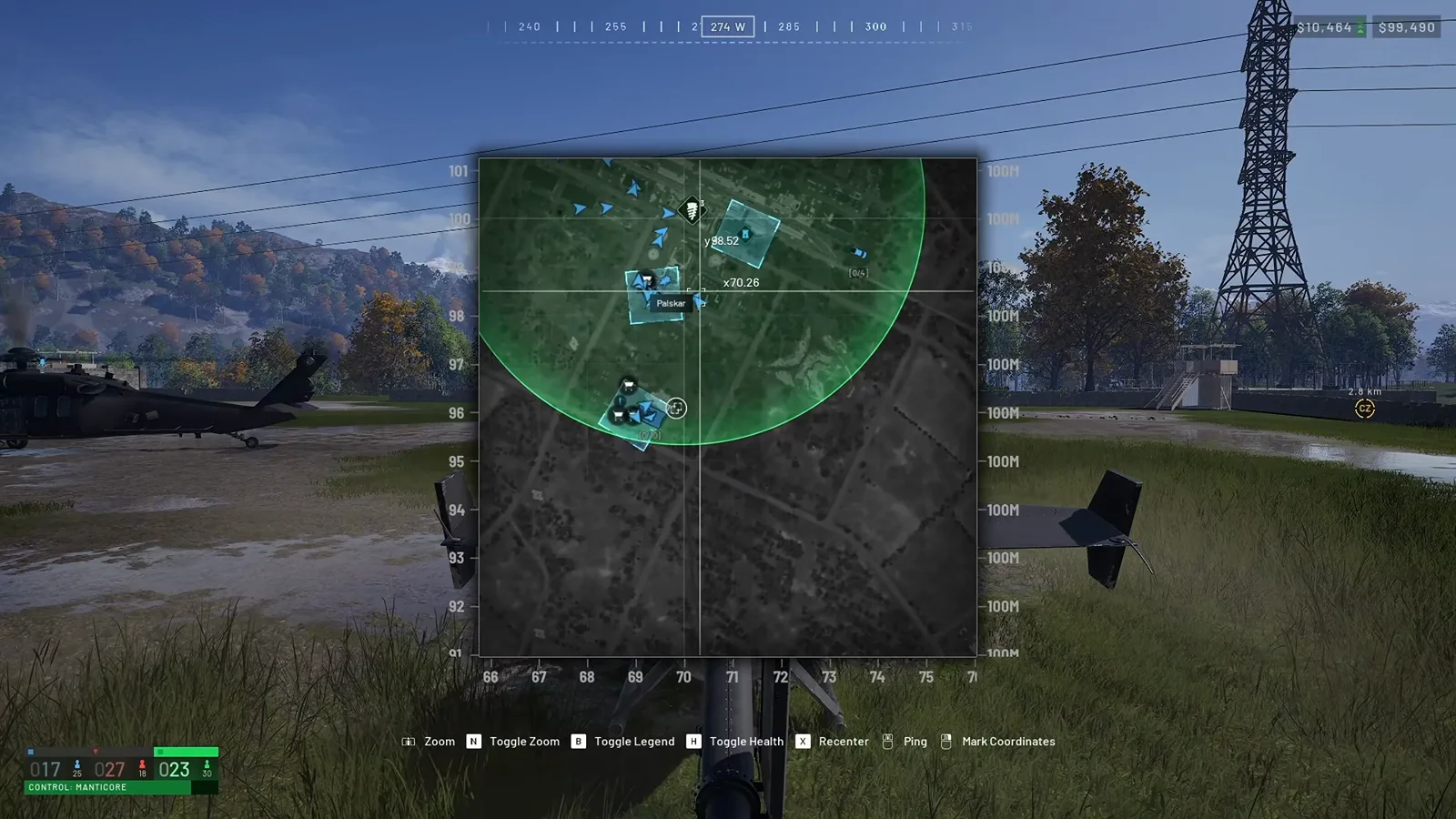 The map is the pilot’s instrument panel: zone geometry, tower positions and your FOBs’ supply state, checked between every run. The green circle is what everyone is dying inside — plan deliveries around its next move, not its current one. Frame: Loknik on YouTube.
Mid Game: The Point of No Return Is Logistics
As the match turns, two signals fire together: the MSV (mobile spawn vehicle) comes online and HQ foot traffic drops off, with fewer pilots flying. The video calls this the point of no return — transition hard into logistics:
- Mechanicals and fuel to the FOBs alongside your normal materials — repairs and refuels keep the armor you already paid for alive.
- Stay ahead of empty, not behind it. The video’s discipline: do not wait for a stockpile to read zero before flying out a pallet.
- Fuel is how you keep the zone. Once your side holds the circle on a fortified FOB with a drill, the drill burns fuel to hold the pull — more fuel at that FOB means the hot zone stays longer. The nightmare the video describes is real in community reports: the zone finally pulled, the fortress built, and nobody stocked the diesel.
- Between runs, top up the infantry. Meds and ammo to the squads holding the fortifications before they move out with the circle, so the push starts full.
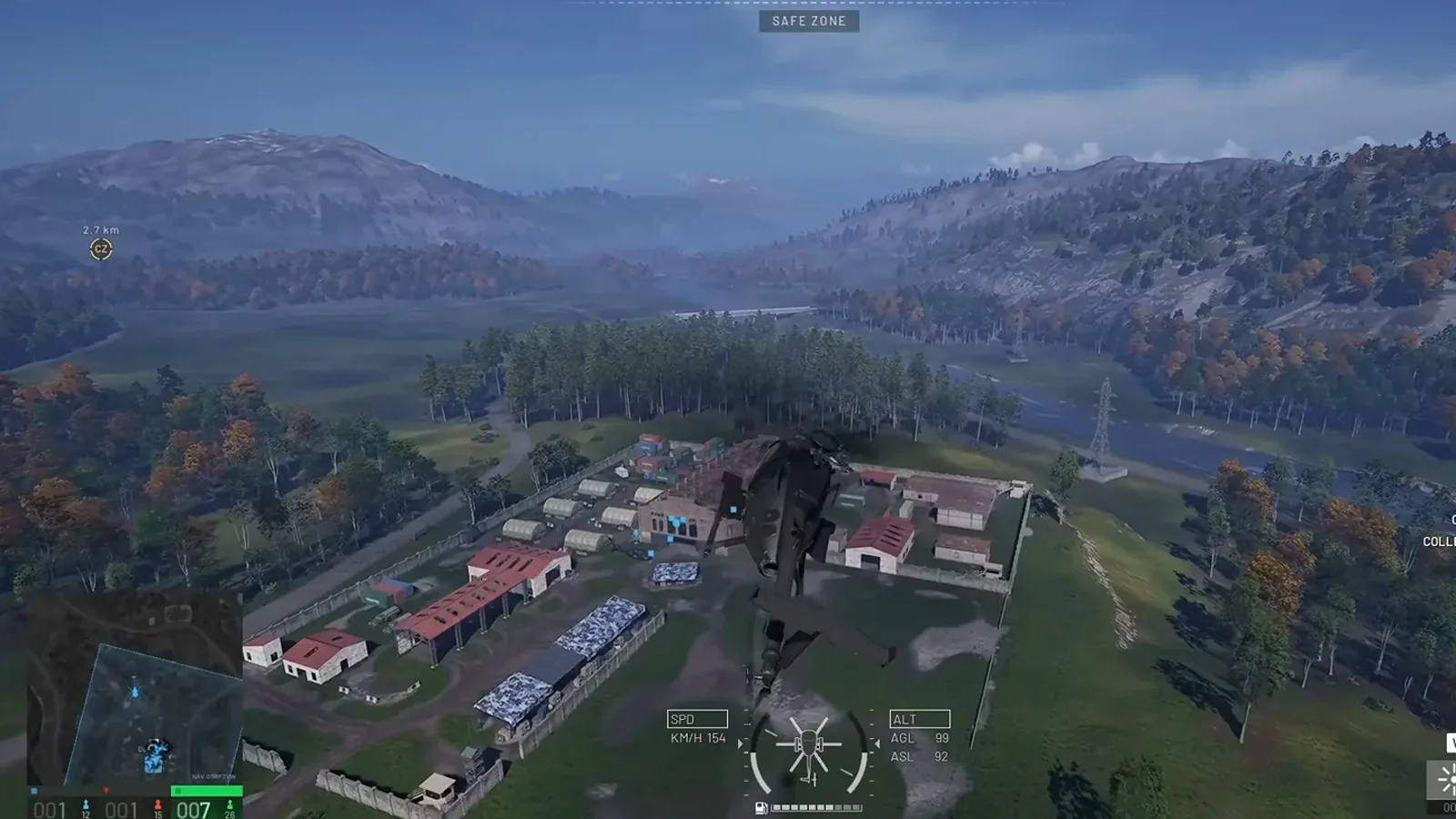 Approach to a fortress FOB: the compound your fuel pallets are keeping alive. Every fortified zone has a diesel heartbeat — the pilot’s mid-game job is making sure it never flatlines. Frame: Loknik on YouTube (seat-HUD column cropped).
Don’t get locked into one run type. The presenter’s anti-pattern: you planned another build-supply flight, but the drill needs fuel and the infantry are dry on ammo — change the flight. The map, the chat box and pinged supply requests are the schedule; your last trip is not.
Two communication habits from the video: join the squad of whoever is building or manning the FOB — direct requests beat guesswork — and watch chat plus map pings for supply calls.
Free Black Hawk: The Mid-Match Gift for New Pilots
No Black Hawk unlocked yet? The video points out a mid-match static Black Hawk spawns at HQ, unowned and available to anyone — take it, and start flying pallets instead of supply crates. The unload-time argument: crates arrive fast but drain slowly into the FOB; a pallet dumps its entire load at once. One constraint to plan around: helicopters sling a single pallet, where larger transports like the Euro carry two — so a heli run is one consolidated delivery, and route choice matters more.
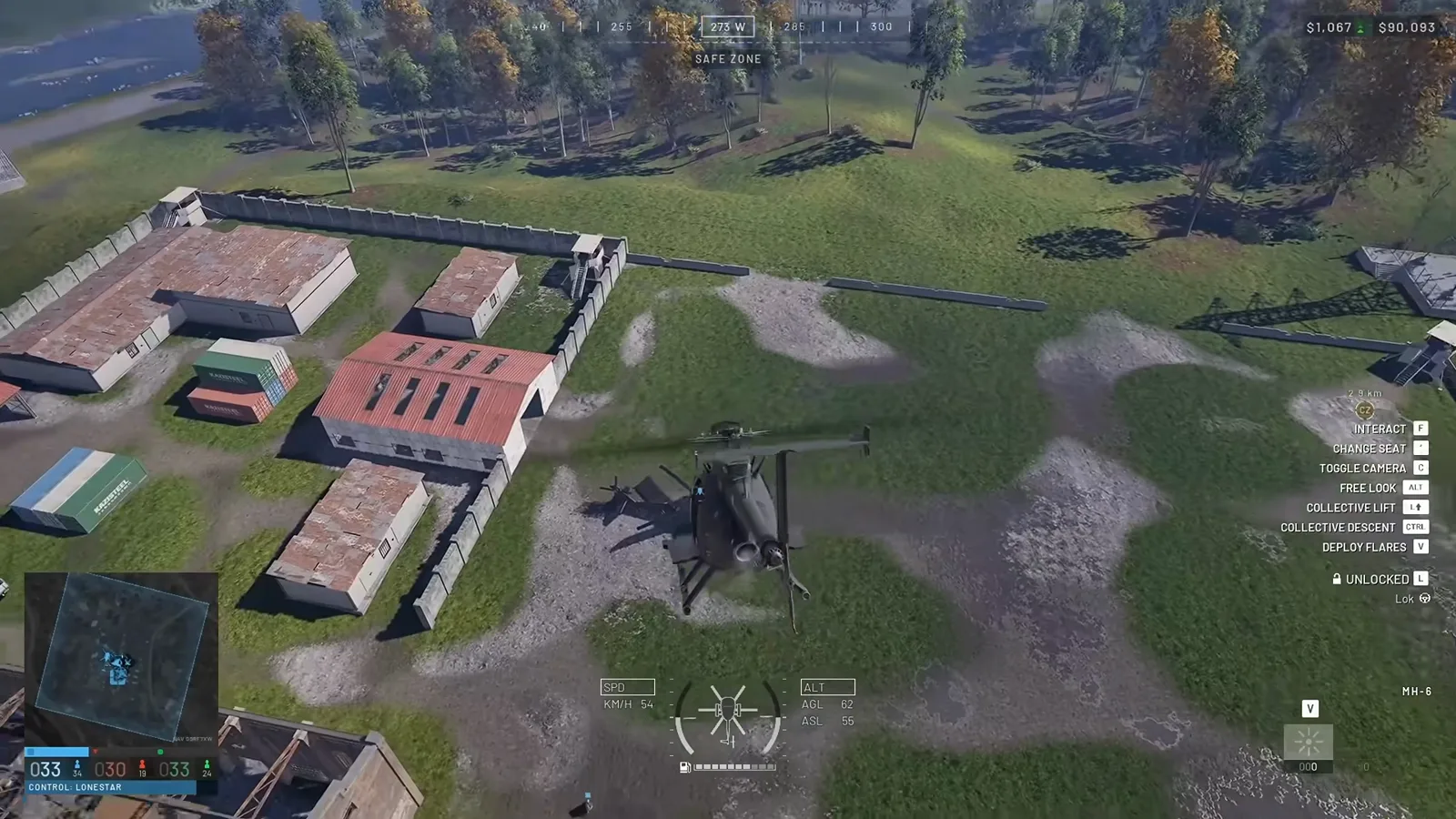 Touchdown at the supply pad: pallet down, stockpiles topped, infantry resupplied inside a minute. The mid-match unowned Black Hawk at HQ is the fastest way for an unlocked-less pilot to start carrying real loads instead of crates. Frame: Loknik on YouTube.
Late Game: Judge the Table, Then Fly the Other Knife
The video’s late-game read is honest about variance: FOBs either devour every pallet you bring or the team abandons them for the circle — judge it per match. Defaults that hold:
- Logistics still wins, usually meds and ammo — keeping live infantry in the fight beats any single spectacular delivery.
- Fly the scouting job. You are already above the map: mark enemy FOBs, spot armor movements, read where the enemy is pushing from. A pilot who delivers nothing still delivers information.
- The drill war. Community flashpoint late: teams fight over drill FOBs because the drill holds the zone. Ferry the infantry who died and lost their gear back to the drill FOB to retake it.
- Or take the CAS turn. The video’s alternative ending: a Little Bird with minigun or rocket pods turns the late match into close air support — the same airframe our anti-air guide tells your enemies how to build against.
What We Deliberately Do Not Claim
The $2,500/500 XP delivery payout and the +$180 presence tick are screen-confirmed on the EA launch build and patch-sensitive; the 45-second-versus-2.5-minute transit figures are the presenter’s paraphrase of a Bulkhead statement, not a published table. The unowned mid-match Black Hawk spawn is presenter-reported from regular lobbies — your server’s spawn timing may vary. None of it is official doctrine.
Where to Go Next
Put the stick skills to work with the flight walkthrough, read your income streams in the pilot money guide, and learn what the ground half of logistics looks like in the logistics guide. Keeping the whole team’s economy healthy is covered in the money-making guide.
Phase doctrine from Loknik — The REAL Job of a Helicopter Pilot in WARDOGS (96k views, Sep 2026); the +$2,500 / 500 XP delivery prompt is screen-confirmed in the linked frame. Presenter-reported items labeled in place; all figures are EA-launch-build and patch-sensitive.
Related Articles
fixes
WARDOGS Tutorial Not Loading: Fix the Training Hang & Post-Tutorial Crash
WARDOGS tutorial stuck on loading, black screen, or an Unexpected Error crash after the tutorial? A verified fix ladder from file verification to config reset.
guides
WARDOGS Sniper Guide: Rifle Choice, Spotting Economy & Positioning
A WARDOGS recon sniping playbook: which rifles to buy and skip, the binocular XP loop, 100 m ranging discipline, and concealment-first positioning.
guides
WARDOGS Support Class Guide: Weapons, Bipod Doctrine & Anti-Vehicle Play
The full WARDOGS Support career playbook: shotgun and LMG unlock ladder, the bipod recoil trick, XP sources beyond shooting, and vehicle kill data.
Was this helpful?
Thanks for the feedback!