WARDOGS Vehicles Guide: All 21 Vehicles, Armor, Fuel and Economy
Complete WARDOGS vehicle guide for Early Access: stats, armor, fuel capacities, compartment HP, and how the per-life cash economy shapes vehicle deployment.
FAQ
How many vehicles are confirmed for WARDOGS at Early Access launch?
Do you keep vehicles between matches in WARDOGS?
How does vehicle compartment damage work?
Can helicopters run out of fuel during a 100-player match?
In WARDOGS, armor is not a free team spawn. While traditional tactical shooters grant tanks and transports on predictable respawn timers, WARDOGS ties every chassis directly to your squad’s persistent bank account. Purchasing an armored personnel carrier or an attack helicopter is a corporate investment: bring it home or survive past tick 20, and the 90% refund rule cushions the risk; get ambushed by an anti-tank rocket on your way out of the depot, and thousands of hard-earned dollars evaporate from your balance sheet.
This guide breaks down all 21 confirmed vehicles for the September 10, 2026 Early Access launch, details the modular compartment damage system, maps out fuel and logistics limitations, and teaches you the economic mathematics of combined-arms warfare.
The 21 Launch Vehicles by Strategic Category
Bulkhead confirmed 21 distinct vehicle variants in their official “10 Reasons NOT to Buy” devlog. These machines are distributed across three warring factions and fulfill specific operational roles across the game’s 2x2km battlefield sectors.
| Category | Typical Crew | Primary Armament | Tactical Role | Confirmed Chassis |
|---|---|---|---|---|
| Light Utility / Recon | 1–4 | .50 Cal MG or Unarmed | Rapid scouting, flanking, initial zone rush | Technicals, Tactical Buggies, Armored Patrol SUV |
| Armored Personnel Carriers (APC) | 2–8 | 20mm Autocannon / Heavy MG | Squad insertion, mobile spawn anchor, light armor protection | Wheeled 8x8 Transports, Tracked Troop Carriers |
| Infantry Fighting Vehicles (IFV) | 3–6 | 30mm Cannon + ATGM Launcher | Armor suppression, infantry fire support, bunker clearing | Tracked Medium IFVs, Autocannon Platforms |
| Main Battle Tanks (MBT) | 3 | 120mm Smoothbore Cannon + Coaxial MG | Heavy breakthrough, anti-armor dominance, objective denial | Heavy Tri-Faction MBT variants |
| Helicopters (Scout & Lift) | 2–6 | Door-mounted Miniguns / Rocket Pods | Vertical insertion, elevated overwatch, rapid extraction | Light Scout Birds, Medium Transport Helos |
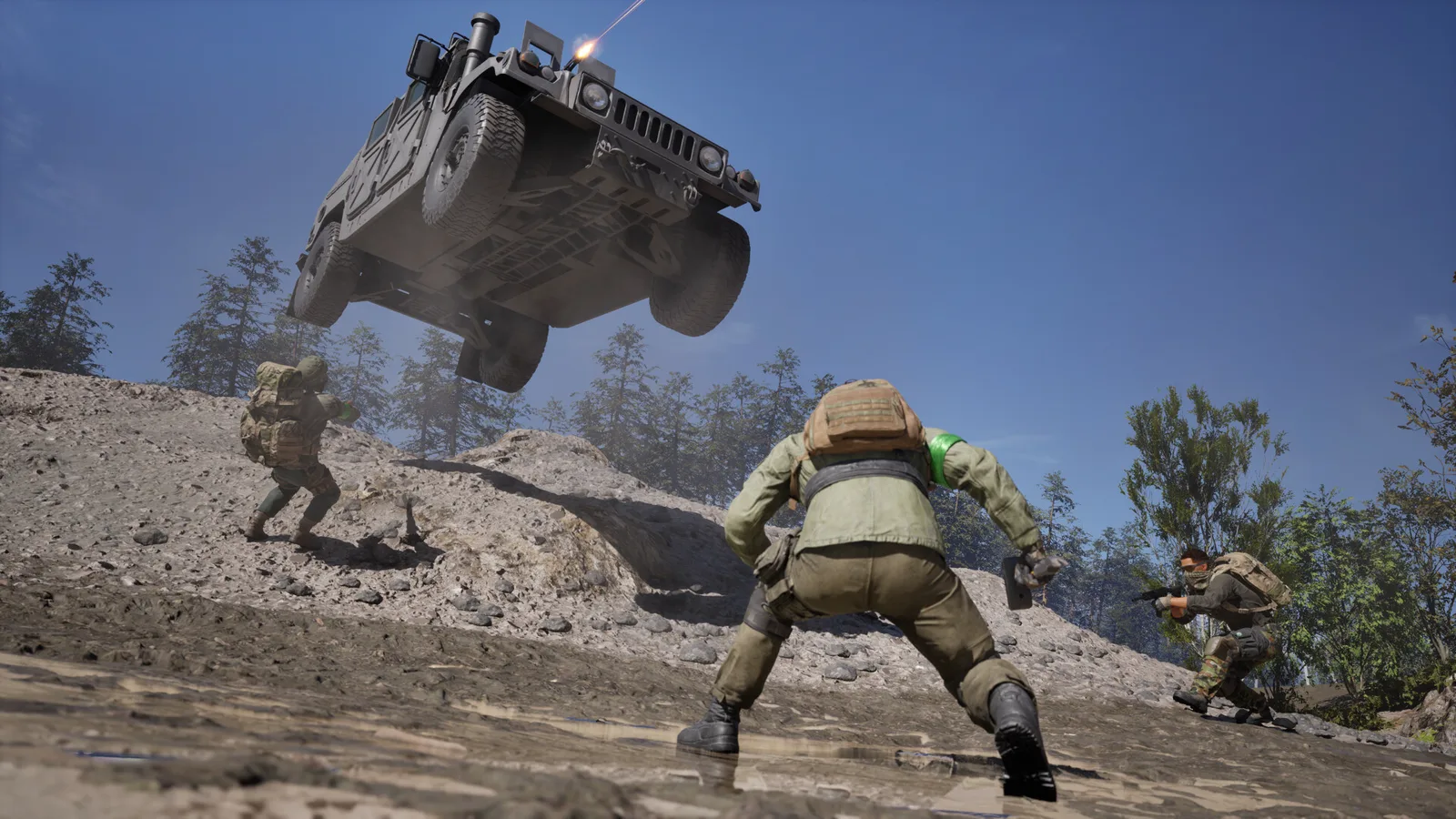 Light utility buggies offer high cross-country speed for early zone capture, but leave occupants vulnerable to small arms fire.
Light Utility & Fast Reconnaissance
Fast vehicles serve as the vanguard of any 33-man team. Costing only a fraction of heavy armor, light reconnaissance vehicles are designed to reach contested drilling towers and neutral forward observation posts before opposing convoys arrive.
- Speed versus Survival: Light vehicles achieve highway speeds exceeding 90 km/h, but their unarmored chassis exposes wheels to small-caliber fire.
- Tire Vulnerability: Concentrated fire from any standard rifle listed in our weapons guide will puncture tires, resulting in severe handling drag and spinouts.
- Budget Viability: If you are playing on a shoe-string budget under $10,000, running a scout jeep with your four-man squad provides maximum mobility at minimal bankruptcy risk.
Armored Personnel Carriers & IFVs
The APC is the true backbone of squad coordination in 100-player lobbies. Unlike light transports, an APC provides enclosed ballistic protection against high-caliber assault rifles and heavy machine guns up to 12.7mm AP rounds.
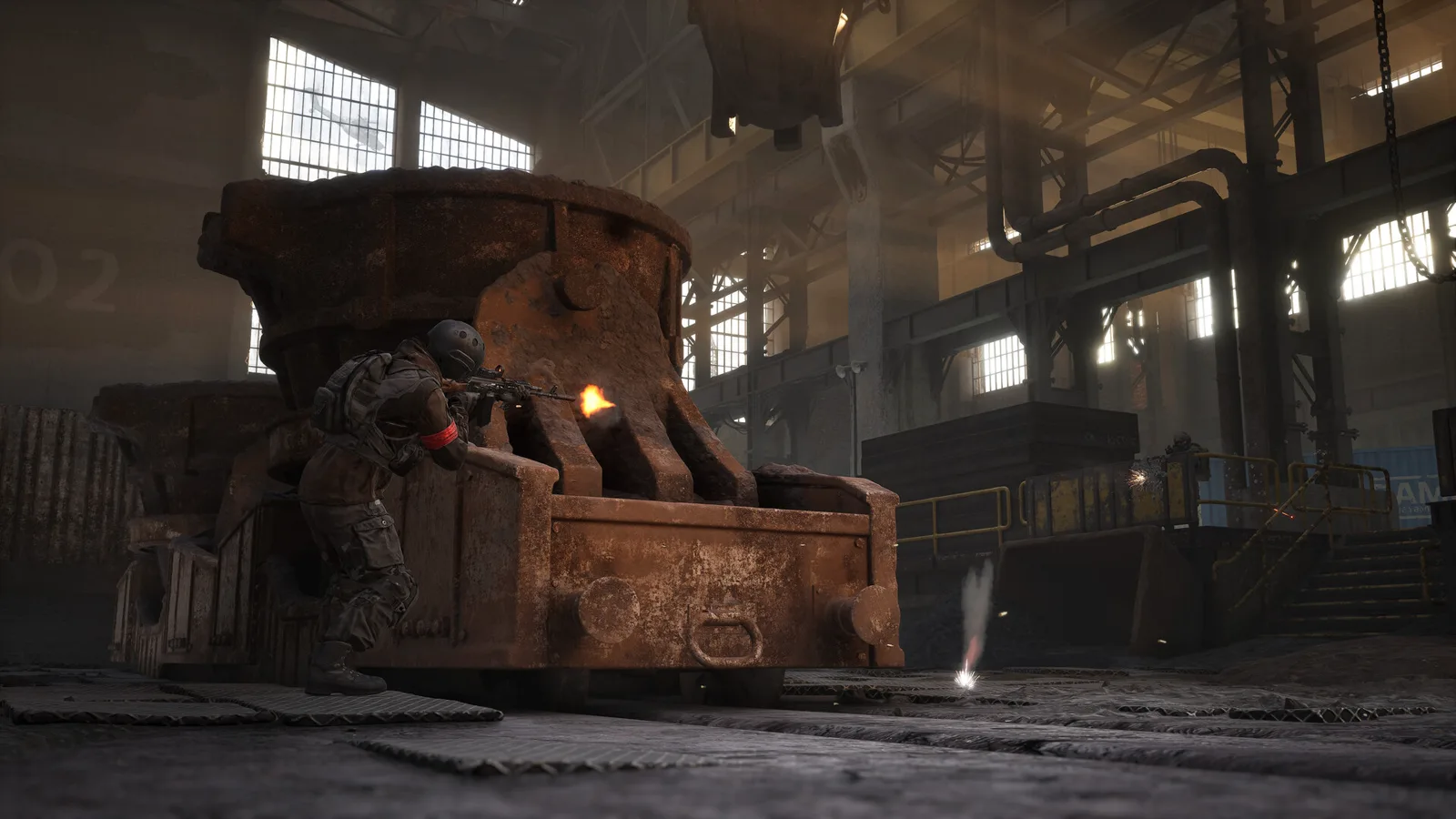 The APC represents the most cost-effective balance between crew protection, deployment capacity, and economic risk.
When operating an APC:
- Maintain Infantry Escort: An APC without dismounted infantry is prey for concealed anti-tank squads hiding in treelines.
- Utilize Smoke Dischargers: Every combat APC features deployable thermal smoke curtains designed to break lock-on systems and blind enemy rocket crews.
- Protect the Rear Door: While front glacis plates deflect light autocannon fire, the rear entry ramp features significantly lighter armor plating.
Main Battle Tanks: Firepower, Armor Angles and Compartments
Tanks are the undisputed apex predators on open terrain like Kavkazi’s rolling hills. However, WARDOGS utilizes a physics-based angle penetration model rather than hitpoint subtraction.
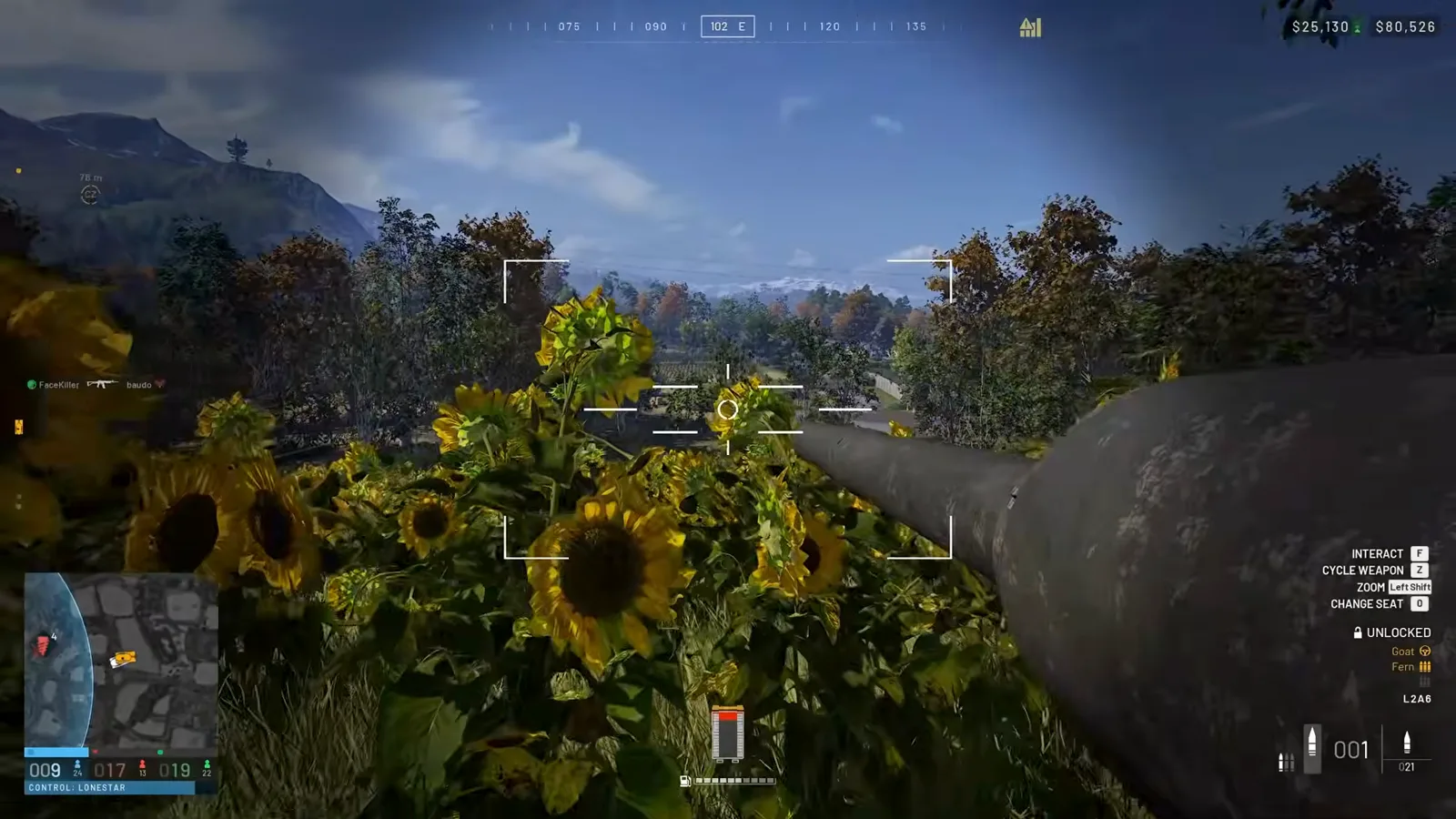 Angling your tank hull at 30 degrees relative to incoming enemy armor increases effective armor thickness significantly.
Compartment Damage System Explained
Every armored vehicle has five independent structural compartments:
- Frontal Glacis & Turret Cheek: Maximum composite armor. Direct hits from kinetic APFSDS rounds often richochet if impacted at acute angles.
- Engine Block (Rear): Minimal armor protection. A single rocket strike to the engine causes instant mobility failure, setting the vehicle on fire and preventing movement until field repairs occur.
- Turret Ring: A hit to the turret ring locks traversing gears, preventing the gunner from aiming horizontally.
- Tracks and Sprockets: High explosive ordnance instantly strips tracks, stranding the tank in place.
- Ammunition Rack: Penetrating hits to the internal storage have a calculated detonation chance, resulting in an immediate catastrophic kill (jack-in-the-box effect).
Rotary Aviation: Scout and Transport Helicopters
Air superiority completely transforms the geometry of WARDOGS 2x2km maps. Being able to ferry an entire squad over mountain ridges in 45 seconds bypasses choke points entirely.
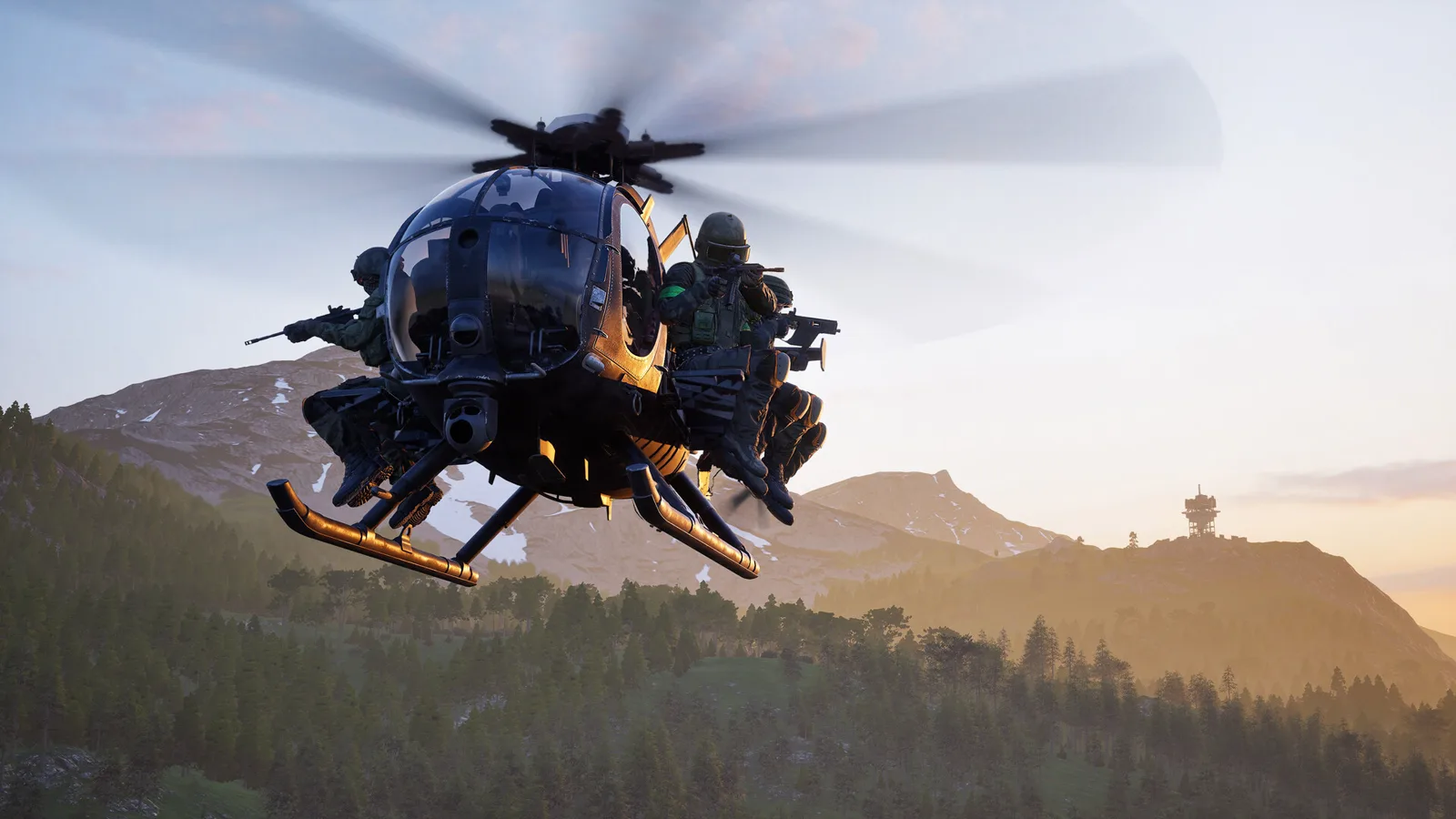 Low-altitude nape-of-the-earth flight avoids long-range anti-aircraft radar and handheld surface-to-air missiles.
Flight Mechanics and Fuel Constraints
Piloting rotary aircraft requires master control of collective and cyclic physics. As outlined in our best settings guide, configuring dedicated mouse yaw or HOTAS bindings is essential for survival.
- Fuel Burn Rates: Hovering consumes roughly 35% more fuel per minute than forward cruising at level flight. If your fuel tank reaches empty, the rotor speed decays into an unavoidable auto-rotation emergency landing.
- Small Arms Susceptibility: The tail rotor assembly and cockpit glass are vulnerable to concentrated rifle fire. A skilled marksman can eliminate the pilot through the canopy without damaging the hull.
Vehicle Economy: The Budget Risk Calculation
Why do players hesitate to pull tanks every match? Because the economics of WARDOGS penalize reckless armored losses.
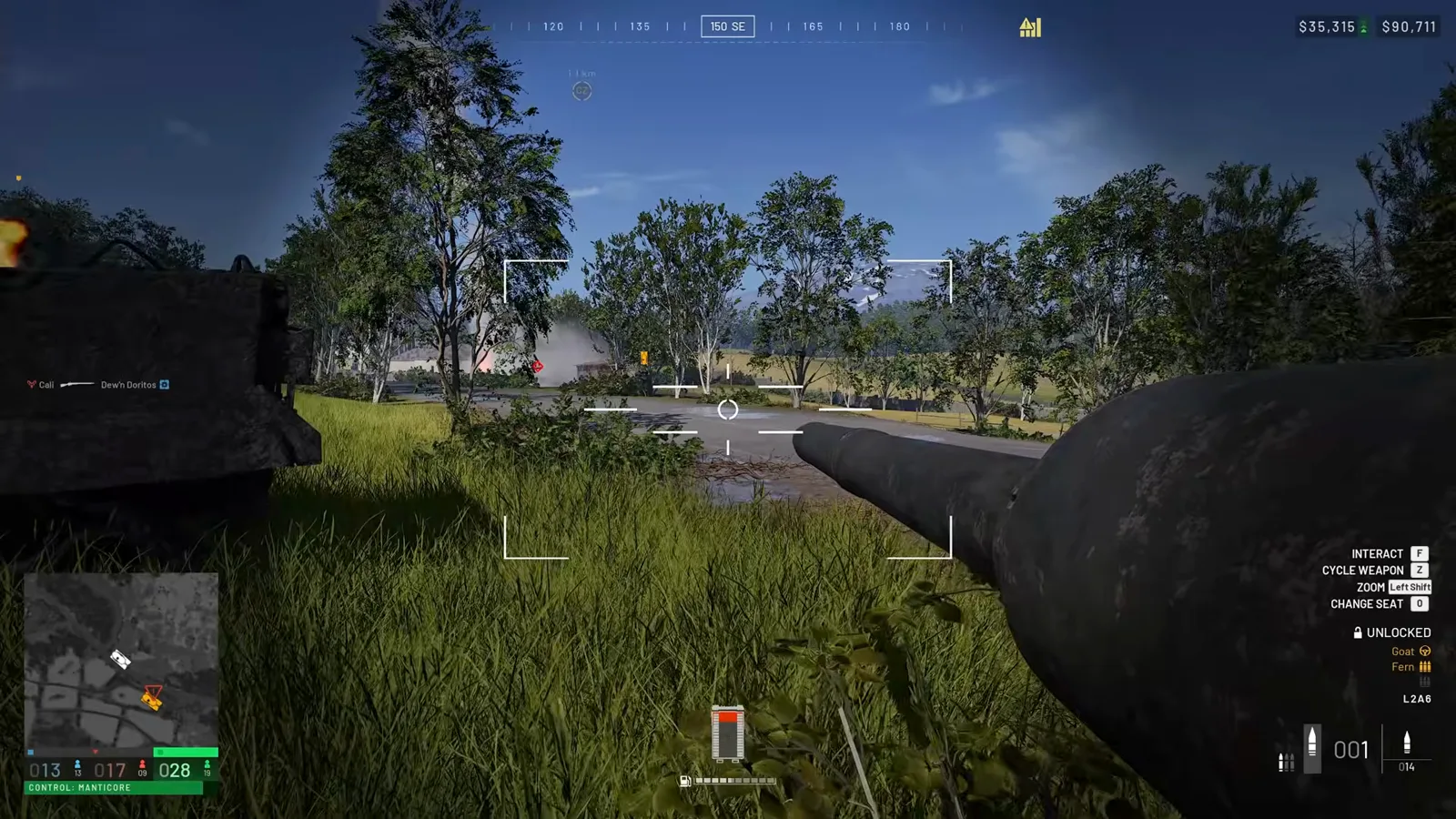 Destroying an enemy combat vehicle awards instant squad cash bonuses, rewarding patient anti-armor ambushes.
The financial equation for every vehicle deployment:
Net Yield = Bounties Earned + Objective Payout - [Deployment Cost × (1 - Refund Factor)]- If your squad buys a $12,000 tank and dies at tick 8, your loss is $12,000.
- If your squad survives past tick 20 and extracts or holds the zone, your refund is 90% ($10,800 returned), meaning the armored support cost your team only $1,200 net!
- For detailed insights into match duration economics and survival thresholds, consult our comprehensive beginner guide.
Essential Anti-Vehicle Combat Tactics
Infantry squads that master anti-tank warfare can cripple enemy bank accounts while filling their own pockets with destruction bounties:
- Cross-Fire Ambushes: Never engage a tank head-on with a single launcher. Position two rocket gunners on opposite sides of the road to ensure at least one projectile strikes the rear engine compartment.
- Mine Choke Points: Place magnetic anti-tank mines along narrow bridges and railroad crossings where vehicles cannot easily maneuver around terrain obstacles.
- Use Smoke for Extraction: If enemy armor pins down your squad, lay dense smoke between the vehicle and your cover to deny thermal imaging targets.
For the complete infantry-versus-armor toolkit — frame-verified rocket counts, weak-zone behavior, and two-man kill drills — work through our anti-tank guide.
Vehicle performance numbers, armor thickness values, and credit costs are verified against Early Access launch builds and will be updated as balance patches go live.
Related Articles
guides
WARDOGS Update 0.2.0 Patch Notes: Season 2 Player Guide
WARDOGS Update 0.2.0 (Season 2), announced 2026-10-15: faster XP, softer calibers, lower logistics pay, new guns and vehicles — key old→new numbers and stale guides.
guides
WARDOGS Update Time: Every Patch & Maintenance Window
Every official WARDOGS patch and maintenance window: exact UTC start time, planned downtime, how much notice players got, and what it is in your time zone.
guides
WARDOGS Player Count: Steam Charts, Peak and Is It Dead?
How many people play WARDOGS? Dated Steam readings, why trackers disagree, the 428,666 vs 402,686 peak gap, beta-weekend counts and whether the game is dead.
Was this helpful?
Thanks for the feedback!